

A commercial lease is one of the most consequential documents a business owner will ever sign, and one of the easiest to get wrong. Unlike a residential lease, a commercial lease in Georgia carries few built-in consumer protections, which means the terms you agree to on signing day are largely the terms you’re stuck with. Understanding the most common pitfalls before you put pen to paper can save your business from years of costly consequences.
At Taylor Odachowski Schmidt & Crossland, LLC, we regularly work with business owners throughout coastal Georgia who need guidance before making major commercial real estate commitments. Our St. Simons Island commercial real estate attorneys understand what’s at stake in these agreements and how to protect your interests at the negotiating table. Whether you’re signing your first lease or renewing an existing one, the mistakes below are worth avoiding.
Skipping Legal Review Before Signing
The most common mistake business owners make is treating a commercial lease like a standard form agreement. In reality, commercial leases are drafted by, and almost always in favor of, the landlord. The U.S. Small Business Administration notes that leasing commercial space is one of the largest financial commitments a small business makes, and that understanding every term before signing is critical to protecting your investment.
Many tenants assume that because a lease “looks standard,” there’s little room to push back. That assumption can be expensive. Georgia law does not cap security deposits on commercial leases, does not require landlords to mitigate damages in every situation, and allows rent acceleration clauses that could make you liable for the full remaining balance of the lease if you default. Having a business law attorney review your lease before you sign gives you the leverage to identify these provisions and negotiate more favorable terms.
Misunderstanding Lease Types and Hidden Costs
Not all commercial leases work the same way, and failing to understand the structure of yours can lead to unexpected expenses that strain your monthly budget. Georgia businesses regularly encounter several distinct lease formats, and the difference between them can amount to tens of thousands of dollars over a multi-year term.
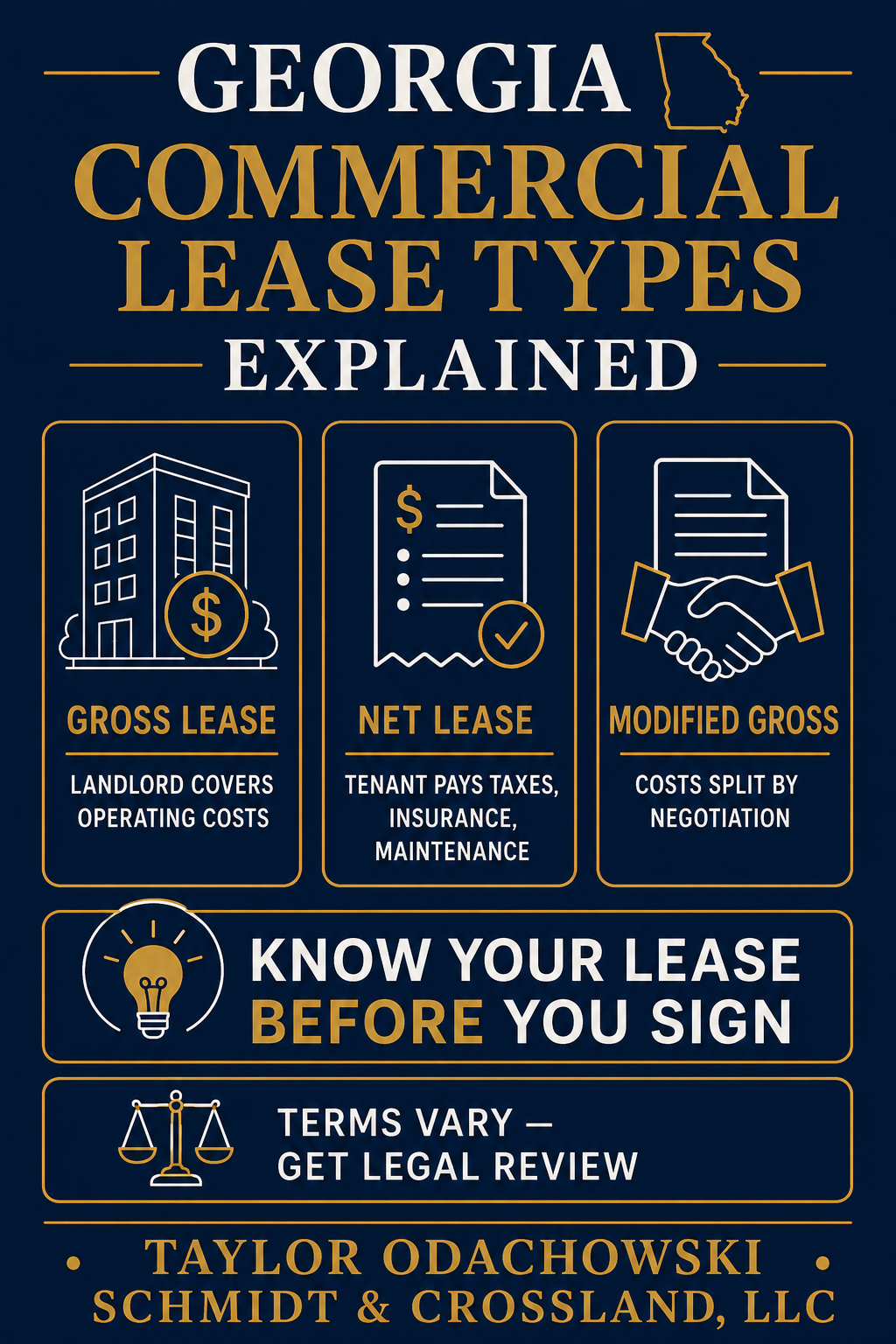
Here is a brief overview of the most common types you may encounter:
- Gross lease: The tenant pays a flat monthly rent, and the landlord covers most operating expenses, including taxes, insurance, and maintenance. This structure provides predictable costs but typically comes with higher base rent.
- Net lease (and triple net): The tenant pays base rent plus some or all of the property’s operating costs. In a triple-net lease, the tenant is responsible for taxes, insurance, and maintenance on top of rent — costs that can fluctuate significantly year to year.
- Modified gross lease: A hybrid arrangement where specific costs are negotiated and shared between both parties. The precise terms vary widely and must be spelled out clearly in the agreement.
Each structure carries different financial risks that must be factored into your business plan. A lease that looks affordable based on base rent alone may prove far more expensive once operating cost pass-throughs are included.
Overlooking Lease Length and Exit Terms
Signing a long-term lease without building in exit options is a mistake that can trap a business in space it has outgrown — or can no longer afford. Many Georgia landlords present five- or ten-year terms as standard, but the length of your lease should match your actual business needs and tolerance for risk.
At minimum, your lease should include clearly defined renewal options at predetermined rental rates. Vague renewal language — such as “rent shall reflect fair market value” — has been found unenforceable by Georgia courts, leaving tenants without the protection they assumed they had. You should also negotiate for termination rights in specific circumstances, the ability to sublease or assign the lease if your business is sold, and any co-tenancy protections if you rely on neighboring tenants for foot traffic. Our team can help you review these provisions as part of our broader business dispute prevention work.
Neglecting to Address Repairs, Build-Outs, and Improvements
Who is responsible for what when something breaks or needs upgrading? This question should never be left to interpretation in a commercial lease. Georgia law provides some default rules on landlord repair obligations, but those defaults can be overridden by specific lease language, and they often are.
Before signing, confirm that the lease clearly identifies who is responsible for HVAC systems, plumbing, structural components, and routine maintenance. If you plan to make improvements to the space, the lease must address who performs the work, who pays for it, and whether the improvements must be removed at the end of the term. Tenant improvement allowances offered by a landlord may sound generous, but the related reimbursement timelines and conditions deserve careful scrutiny. Disputes over build-out obligations are a common driver of commercial real estate litigation, and clear contract language is the most effective way to prevent them.
Contact Taylor Odachowski Schmidt & Crossland, LLC Before Signing Your Lease
Signing a commercial lease in Georgia without proper legal guidance is a risk no business owner should take. The terms you negotiate at the outset will govern your business location for years, and ambiguities that seem harmless today can become expensive disputes down the road. Taylor Odachowski Schmidt & Crossland, LLC has spent decades helping Georgia business owners navigate complex real estate and commercial matters with practical, results-driven counsel.
Our Martindale-Hubbell AV™-rated attorneys serve clients throughout Brunswick, St. Simons Island, and the surrounding Golden Isles region. We take the time to understand your business goals and provide guidance tailored to your specific situation. If you’re preparing to sign a commercial lease or need help reviewing an existing agreement, reach out to our team through our contact form today.
